In summary
To choose the right AI agency in 2026, six criteria make the difference: the quality of the initial scoping, client references, technical mastery (LLM, RAG, agents), transparency on ROI and industrialisation costs, compliance (RGPD, AI Act) and the ability to deliver end-to-end. The French market has over 300 players; 80% of AI POCs never go into production. We offer you a method to choose the best agency according to your AI needs.
Overview of AI players in France in 2026
The French AI agency market has exploded, with over 300 players identified. Four typologies coexist:
| Typology | Examples | Strengths | Limitations |
|---|
| Global Consulting Firms | Accenture, Capgemini Invent, BCG X | International reach, large-scale transformation | Very high costs (>€500k), junior teams on Delivery |
| Tech Service Providers | Theodo, Sicara, Onepoint | Industrialisation capability | Less pure AI differentiation |
| Custom AI & Product Agencies | Galadrim | Combined AI expertise + Product development, end-to-end Delivery, tailored positioning and strategic projects, | Less relevant for basic integrations |
| Specialist AI Boutiques | Phacet, Koïno, Stema Partners | AI niche, proximity | Limited scaling capability for large accounts |
| Freelancers / collectives | Variable | Competitive costs, short-term assignments | No end-to-end management |
No single typology is universally better. The right choice depends on your organisation's maturity, the project's criticality, and your internal capacity to manage a service provider.
The 6 criteria for choosing your AI agency
1. The quality of the initial scoping
An agency that suggests coding before understanding your business processes is a bad sign. The right approach: demand a short scoping workshop (5 to 10 days), with a written summary of prioritised use cases, target KPIs and the proposed architecture. Without this deliverable, you are buying developer time, not a project.
2. Verifiable client references
Beyond the logos displayed on a website, take an interest in concrete case studies. Always ask: what was the business problem? How long did the project last? What were the before/after figures? Example: at Showroomprivé, +400% productivity gained thanks to an AI solution for product sheet generation; at Le Parisien, SEO costs divided by 4.
3. Real technical mastery
AI isn't just about calling an OpenAI API. A credible agency in 2026 knows how to explain its choices on multi-Large Language Model routing, RAG (retrieval-augmented generation), agent architectures, fine-tuning, model observability in production, and structuring partnerships such as
Salesforce Agentforce or Microsoft Azure OpenAI. Ask precise technical questions during the first meeting.
4. Transparency on ROI and industrialisation costs
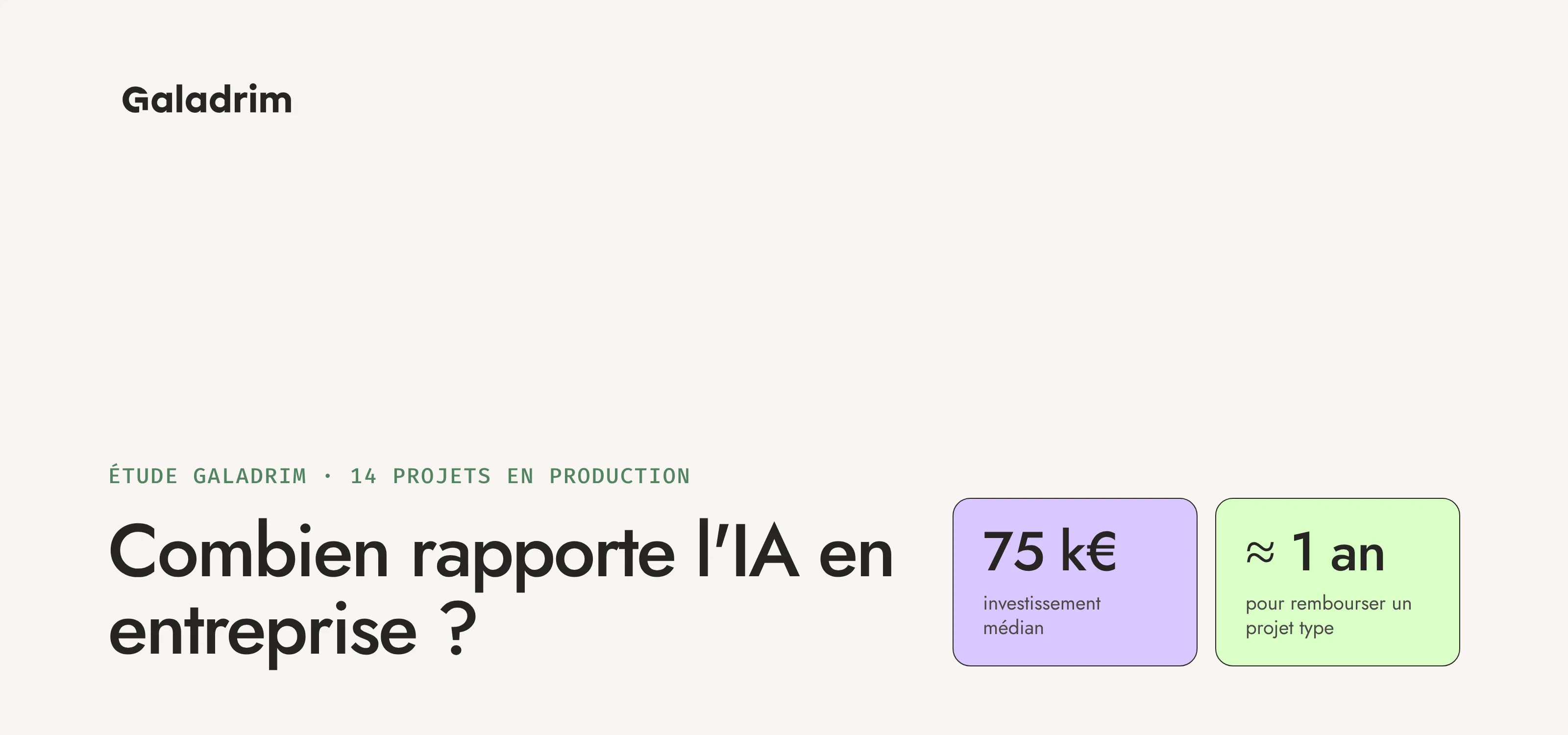
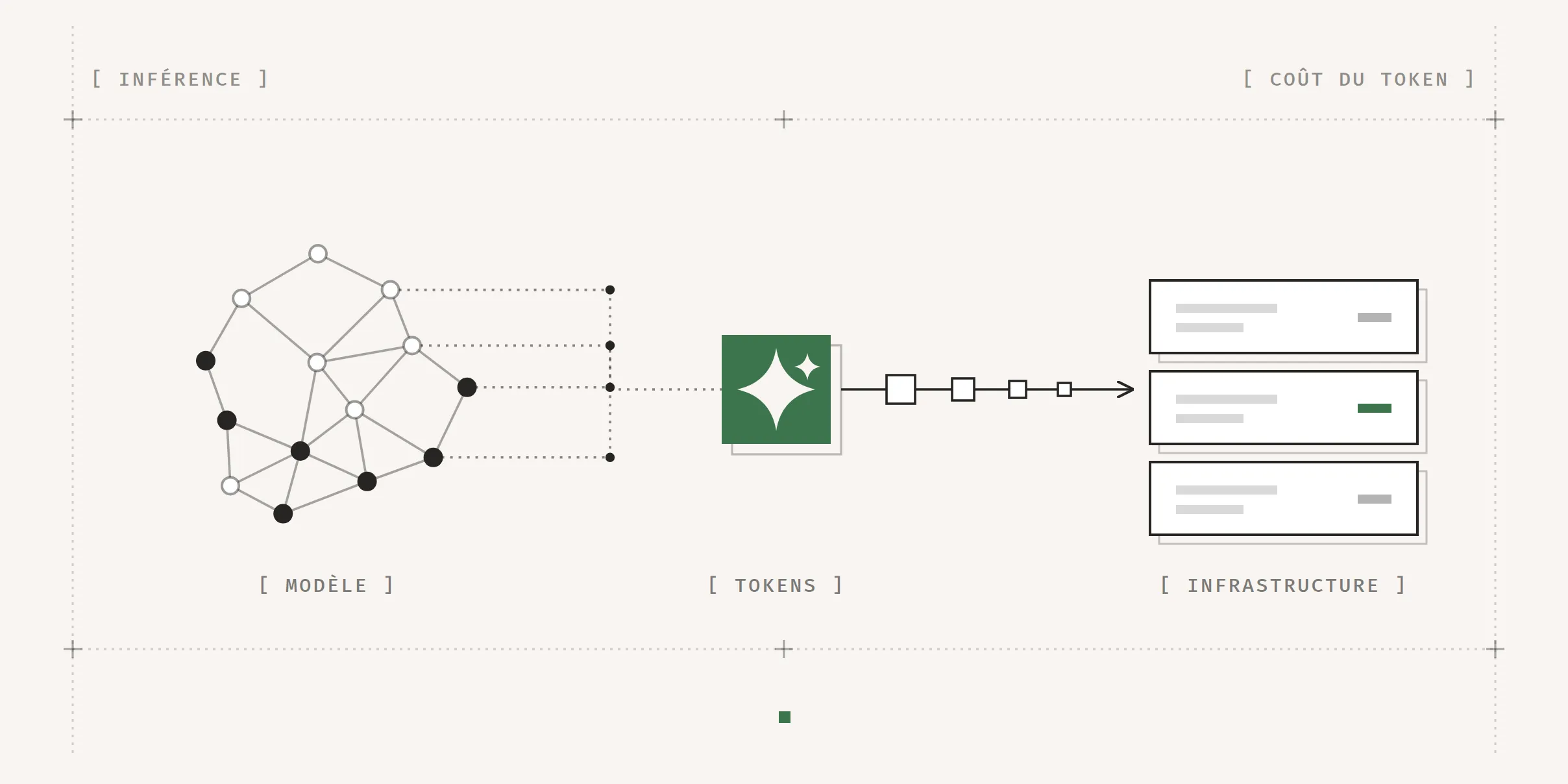
It's the classic trap: a Proof of Concept (POC) for €30,000 that costs €400,000 to put into production. According to 2026 benchmarks, the median ROI of a B2B AI project is between 100% and 200% over 12 months, but only for projects properly scoped upstream. Demand the industrialisation cost, the monthly operating cost (tokens, infra, run) and the projected ROI with explicit assumptions right from the initial quote.
5. Sovereignty and compliance
The
European AI Act has been progressively coming into force since 2025. Depending on your sector (health, finance, public sector), constraints on data hosting, model documentation and compliance audits are structuring. Verify the agency's ability to work with European Large Language Models (Mistral, sovereign hosting) and to produce the required technical documentation.
6. End-to-end Delivery capability
Scoping, Proof of Concept (POC), industrialisation, production deployment, run, evolutionary maintenance: each step requires different profiles. An agency that can create a POC on Lovable but has never operated an AI solution in production at scale can limit the deployment of your solution. Ask to see their DevOps stack and production deployment process.
The 3 classic pitfalls to avoid
Technological dependence. Some agencies lock you into a proprietary framework or a single model. Favour portable approaches: in-house code, standard cloud infrastructure, the possibility of changing Large Language Models.
The Innovation Lab that never goes into production. A significant budget swallowed up by prototypes that generate no value. The right health indicator for an AI project is the number of active business users after 6 months.
Describe the business problem rather than the imagined technical solution.
Request a costed scoping workshop.
Enquire about client references.
Get a detailed breakdown of industrialisation and run costs.
Set measurable business KPIs from the contract outset.
Plan a 30-day checkpoint with an exit criterion.
About the author: Benjamin Drighès is a Partner and AI CTO at Galadrim, a French tech & AI agency based in Paris. Galadrim has delivered over 100 AI projects since 2017 for clients such as BNP Paribas, Chanel, and Odealim. Benjamin Drighès' LinkedIn.
Are you preparing an AI project? Let's chat for 30 minutes to scope your needs.

_2b7wQd.webp)