Where to start? Which technologies to choose? How to define my target? What are the main steps to follow?
If you're considering creating a web or mobile application, this article will explain step-by-step the different stages to follow.
Definition of the business behind the project
Define the business hypothesis
The first crucial step is defining a hypothesis linked to a business problem. What is the main objective? Who are the competitors? What is the added value of my solution that allows it to stand out?
Validate the hypothesis
A cost-effective and quick way to validate hypotheses is to
create landing pages and distribute them to potential targets by encouraging users to sign up if they are interested.
This approach allows for the identification of "beta-testers" while also identifying potential acquisition channels and costs.
Definition of key functionalities
Creation of the Minimum Viable Product (MVP)
This is a first version of the application that includes the essential features to satisfy the early adopters.
To identify the features of the MVP, it is advisable to classify the features by the value score they bring to the user.
Ask for advice
Several types of contacts should be prioritised:
Potential users to delve deeper into the need and gather their feedback from the problem definition stage
People who know the market you want to target well
User experience (UX) experts who can help you define the features
Developers who can guide you on the form of the MVP: web or mobile application, bespoke development or SaaS. They can also estimate the workload associated with each feature
Prototyping
Conduct a competitor benchmark
It is advisable to carry out
a study of competitors in order to understand the best practices to adopt, both in terms of user experience and design.
This step will help to understand the performance and weaknesses of your project in relation to the competition.
Definition of user journeys
A user journey corresponds to the experiences a person has when interacting with something, usually software. The definition of these journeys allows us to imagine the user's mental process on the application and to anticipate their questions.
They are created in diagram form and aim to schematise the steps a user can follow and the different choices available to them.
Among the existing tools,
Whimsical is ideal for teamwork.
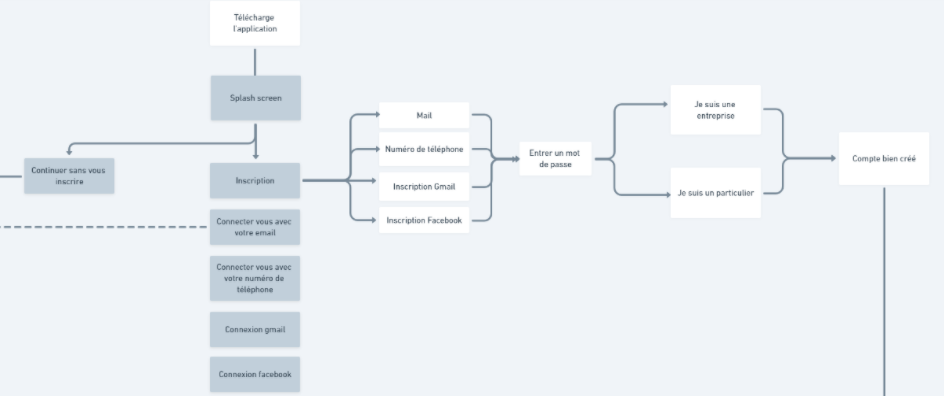
Definition of user journeys
Creation of wireframes
The wireframes are black and white screens that can be navigated to understand the application experience.
This step allows for the validation of journeys with early adopters by having them test the wireframes. The absence of design and visual identity allows the tester to focus on the features and not on whether they dislike a colour or an image.
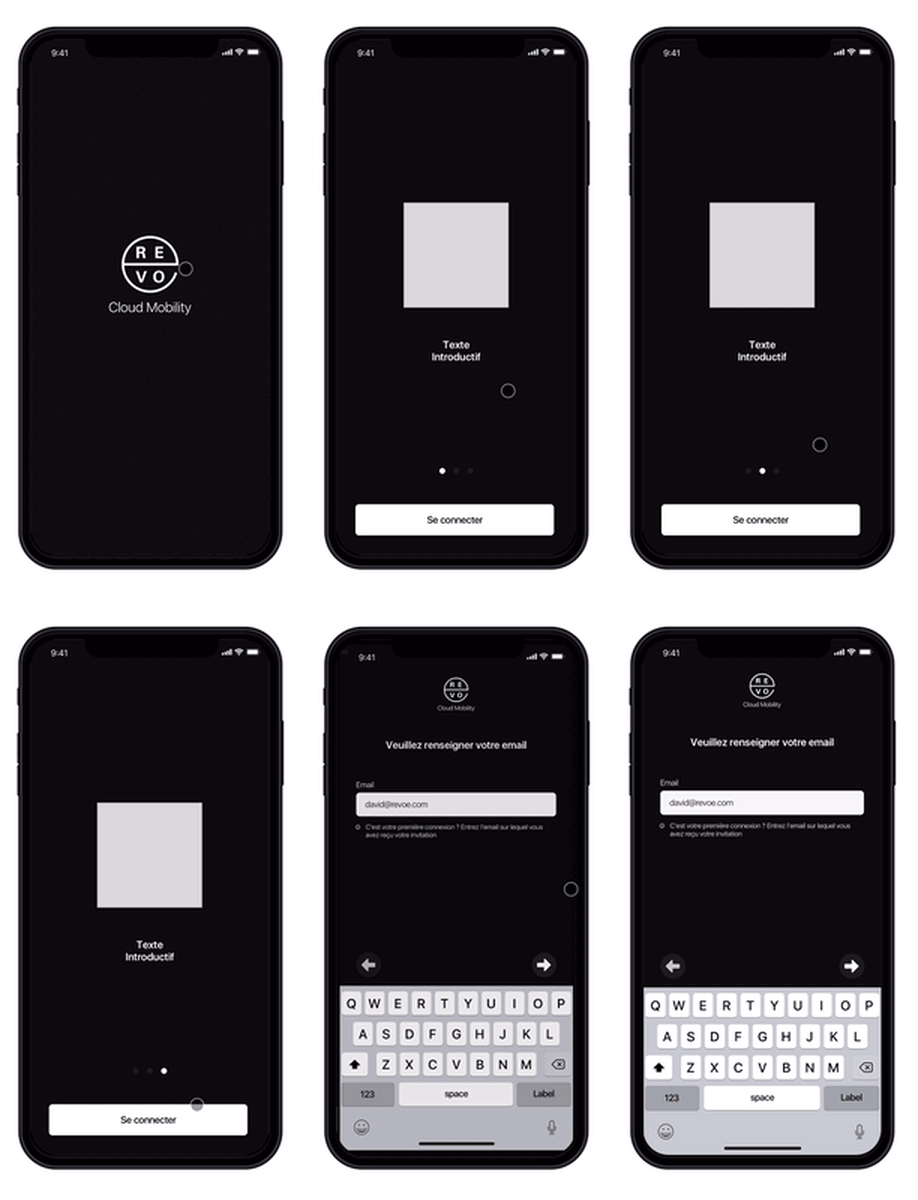
Example of wireframes
Creation of a final prototype
First and foremost, the application's graphic identity must be clarified, which will serve to create consistency between the product and the brand.
At this stage, the designer modifies the wireframes by adding a graphic touch to them to produce an animated mock-up that will have the exact appearance of the final application.
It is generally this step that will give you elements to present to investors and early adopters potential.
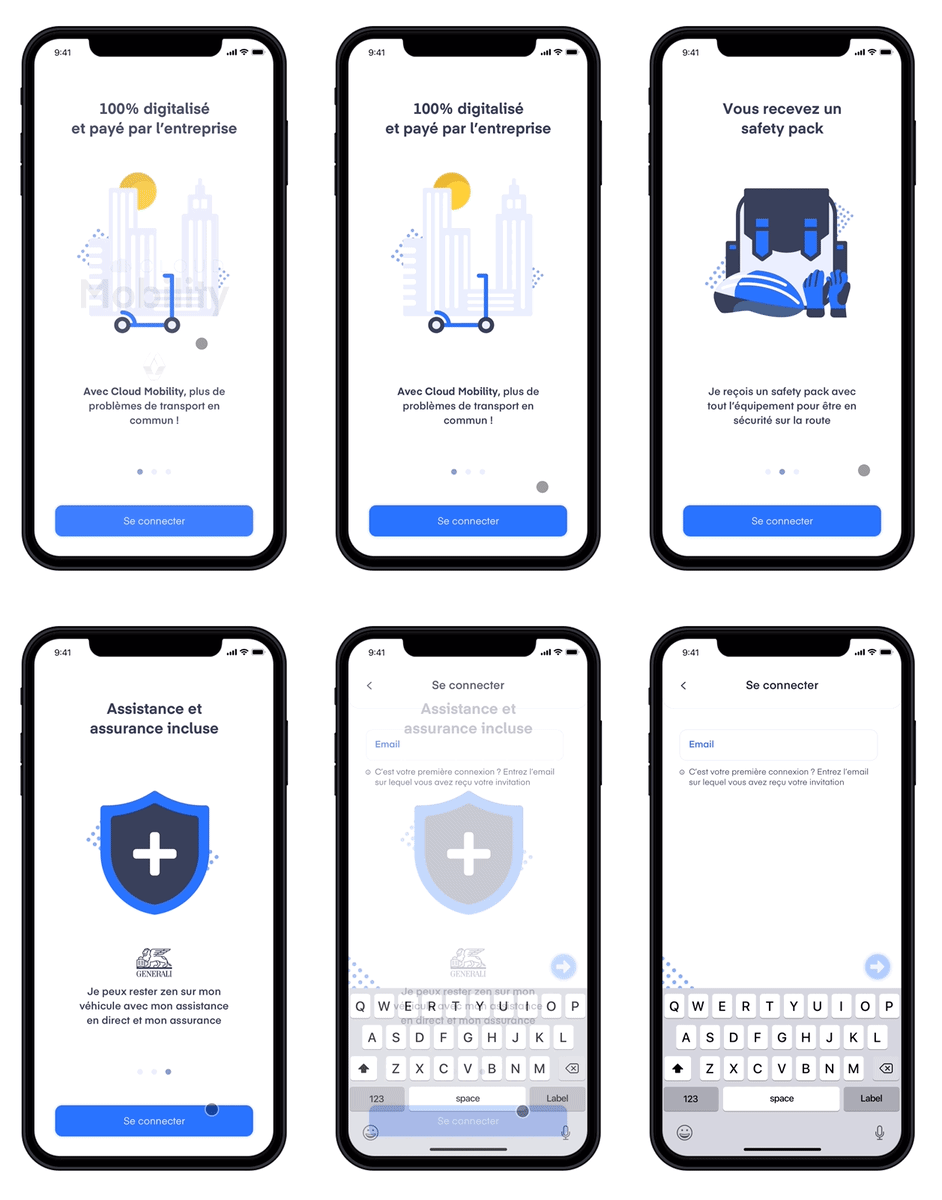
Example of animated mock-ups
Development
The key players
Different methodologies exist for developing an application. The agile method is very popular, especially the Scrum framework, by productively and creatively delivering products of the highest possible value. In this method, different stakeholders take part in the project:
The product owner is in charge of defining with the development team the features to prioritise, conducting tests and providing feedback to the development team.
Thetechnical team is responsible for the technical quality of the project. It advises the client on task prioritisation and on the most technical features. It will also be in charge of the development and long-term monitoring of the project.
Development using the agile method
The agile method works in sprints, short-duration iterations during which the development team will implement the different features of the application.
To maximise the efficiency of developments, it is interesting to work on sprints or iterations lasting from a few hours to a month (two weeks on average). This allows for control over the project's progress and the ability to adapt in case of a change of direction in feature implementation.
Take feedback into account
The agile methodology also highlights the importance of exchanges, taking feedback into account, and flexibility. Indeed, it does not commit to fixed and rigid specifications at the start of a project but allows for adaptation to possible evolutions.
Conclusion
Making the decision to embark on application creation can be facilitated by defining the key features. This allows for the creation of the wireframes and mock-ups representing a first tangible product to show to the target market and potential investors. It is also important to find a trusted partner to carry out the application's development.
Finally, an adequate acquisition strategy must also be defined in parallel
an adequate acquisition strategy in order to quickly gather as many users as possible.