What is SEO?
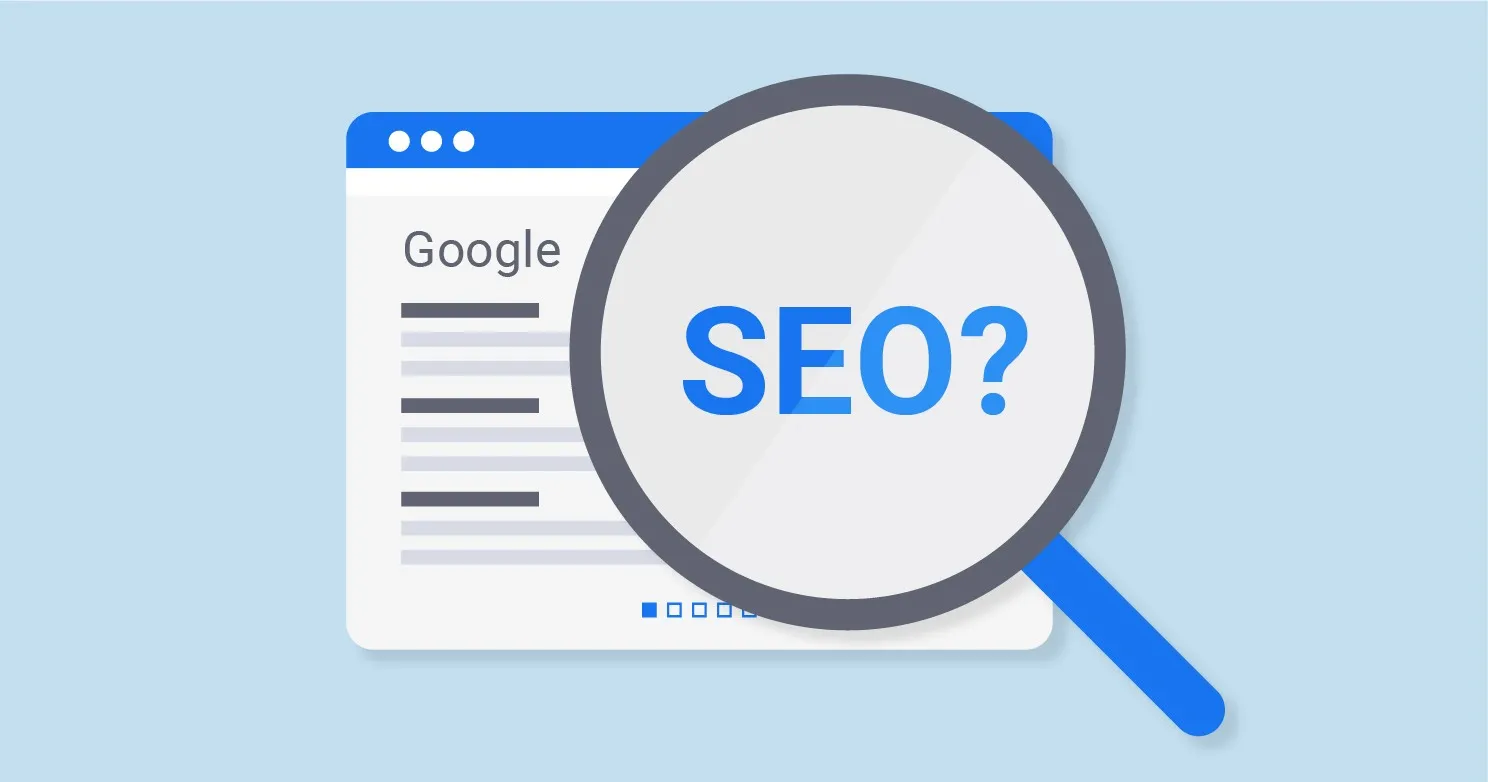
SEO, for Search Engine Optimization, refers to all actions implemented to improve the organic traffic of your website, i.e. the traffic from natural results and not sponsored. Establishing an SEO strategy is essential to increase visits to your site, generate new leads, trigger contact requests and much more.
Organic search ranking is a key factor for your visibility: 90% of traffic is generated on the first page of Google results, with 60% on the top three results!
Understanding page crawling by Google bots
Crawling is a key concept in SEO. To understand it, one must first look at Googlebot: Google's search robot continuously crawling the Web. Its role is to automatically analyse web pages to index them. It is this compiled index that will help the search engine rank them according to their relevance.
But this small robot will not necessarily explore your entire site. It is subject to limitations materialised by a crawl budget, or exploration budget, which will determine the maximum number of pages to be reviewed.
Therefore, it is important to optimise the factors influencing this crawl as much as possible, in order to maximise this famous budget.
Optimise your page loading speed
Your website must first and foremost be fast. Good technical choices are needed to accelerate page loading speed:
Prioritise recent languages and frameworks
Limit the number of scripts running in parallel during navigation
Ensure that the images used are not too heavy
Build a suitable tree structure
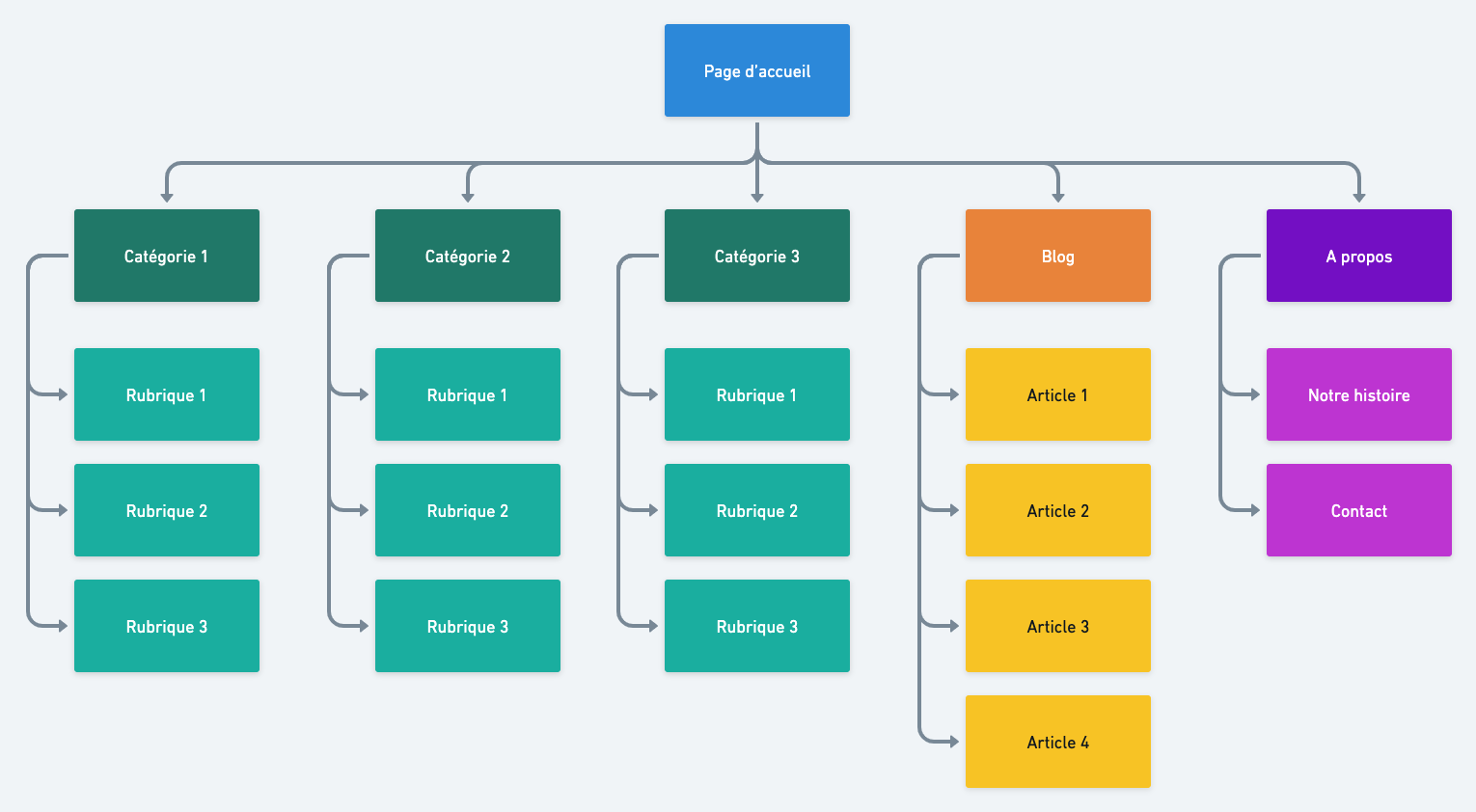
On the internet, the tree structure represents the structure and organisation of a website's pages (defined by their URLs). The latter generally consists of a homepage, as well as supplementary pages classified into categories and sub-categories.
It is crucial to build a sensible tree structure by rationally dividing the different parts of the site by topics and categories.
Similarly, ensure you optimise your site's internal linking to streamline navigation for your users. A page can thus direct visitors to related pages and promote the conversion channels you've implemented: contact, quote request, product purchase, etc. It's also a powerful way to lead visitors directly to a deep page in the sitemap (a page located more than 3 clicks from the homepage).
Writing user-friendly URLs
One of the most frequent errors is not paying attention to your web page URLs. If these are not understandable for a user, there's a high risk that they won't be to Googlebot's liking either.
For a blog post:
🟢 https://galadrim.fr/blog/quest-ce-qu-un-mvp
🔴 https://galadrim.fr/ann1/ques-aaad56b235d
For an e-commerce website:
🟢 https://vêtementspaschers.fr/pantalons/modèles-hommes
🔴 https://vêtementpaschers.fr/pan564/ac66b423ddc
Properly structuring pages
In HTML, there are 6 tags for headings ranging from h1 to h6 (h1 being the most important, and h6 the least important). These heading levels allow for the hierarchical organisation of a page's content by indicating the degree of importance of each content element.
Ensure you only have one h1 tag per page. This should include the most relevant keywords associated with the content you're publishing, and should be neither too short (fewer than 30 characters) nor too long (more than 70).
Also, don't jump from one topic to another: there's no reason to multiply h3 tags if you haven't even placed an h2 tag beforehand.
Furthermore, remember to add “alt” tags for images, allowing a description to be displayed if they fail to load. Indeed, these tags are well-considered by Google for SEO. They particularly help to further contextualise the content published on your website.
Writing quality and relevant content
One of the keys to organic SEO is, of course, the content itself. Ensure it's interesting, relevant, well-written, and in line with your targets and their interests: for example, bear in mind that a specialised site and a generalist platform won't benefit from using the same vocabulary and terminologies. Do not hesitate, however, to strategically place keywords in your paragraphs to prove to the search engine that the information delivered is precisely calibrated and of quality.
Furthermore, the blog is one of the most powerful tools at your disposal in SEO. It allows you to highlight your expertise to boost traffic to your site, and even generate leads!
Finally, note that duplicating content, whether from pages on your own site or from an external site, is never a good idea. Indeed, Google has Google Panda, an algorithm focused on identifying copied/pasted texts and responsible for penalising offending platforms, potentially leading to de-indexing them.
Multiplying backlinks
A backlink is a hyperlink pointing from an external site to yours. Googlebot will use these links to crawl the web and find connections between sites. It therefore plays a key role in SEO as it proves to Google that your site is popular and high-quality. The aim is to increase your trust score, commonly known as “Trust Flow”, to guarantee good exposure by the search engine.
Beware, some sites today practice "artificial netlinking": the massive sale and purchase of backlinks supposedly boosting your SEO and multiplying redirections to your site. In reality, this is not the case. Google is well aware of these practices and has implemented a special algorithm, Google Penguin, dedicated to tracking platforms using these strategies of spamdexing (abusive SEO) to penalise them. We therefore strongly advise against this practise!
The right tools to improve your SEO
Well done! You now know the main pitfalls to avoid and the best practises to implement to maximise your site's SEO.
To establish a new strategy for your platform now, we advise you to rely on the following tools:
Google PageSpeed Insights
This tool highlighted by Google allows you to measure a page's loading speed and find areas for improvement.
A global score from 1 to 100 is assigned to the tested page, and a report is automatically generated covering both the desktop and mobile versions. The report provides advice to reduce loading time: image encoding, optimising JavaScript code by removing unused resources, reducing the number of query strings, etc.
Google Search Console
Google Search Console is a free service that allows you to better understand how Google analyses your site's content, and thus optimise its ranking in search results. This solution offers a plethora of tools and reports:
Confirm that Google detects and crawls your site
Resolve indexing issues
Consult search traffic data for your site
Discover sites linking to your platform
Resolve content and usability issues
Google Keyword Planner
Google Keyword Planner was developed to assist the launch of Google Ads (SEA) campaigns but is actually just as relevant for optimising your SEO strategy. This solution allows you to analyse keywords frequently entered by users and helps determine what type of content to prioritise. It particularly allows you to be offered a list of the most searched keywords, obtain the search frequency of chosen keywords and see it evolve over time.