At the beginning of an innovation process, it can be difficult to determine if an idea will be feasible in practice. Directly embarking on large-scale development, whether technological or commercial, proves risky and costly if the project's foundations have not been tested beforehand. This is where the Proof of Concept, better known as PoC (or Proof of Concept in French).
A PoC allows teams to validate the feasibility of an idea by conducting a controlled, small-scale experiment. It's a method that tests theory against practice, determining whether an idea is worth pursuing.
What is a proof of concept used for?
The main objective of a PoC is to reduce uncertainty. Every new idea rests on assumptions: How will systems behave? How will users react? The PoC allows these assumptions to be tested quickly and cost-effectively. Rather than investing heavily in a product that might prove unsuccessful, teams create a limited version of the concept to verify that the basic idea works. This helps identify technical risks, clarify understanding of the problem, and avoid unnecessary resource allocation.
In addition to reducing risks, the PoC helps generate collective buy-in. It provides internal teams and external stakeholders with concrete proof that the idea is not just theoretical. A successful PoC can convince executives, customers, or investors to support the project. Conversely, if the PoC fails, the team gains valuable insights to adjust or abandon the idea. In any case, the PoC is an essential learning step.
The practical uses of a PoC in web development
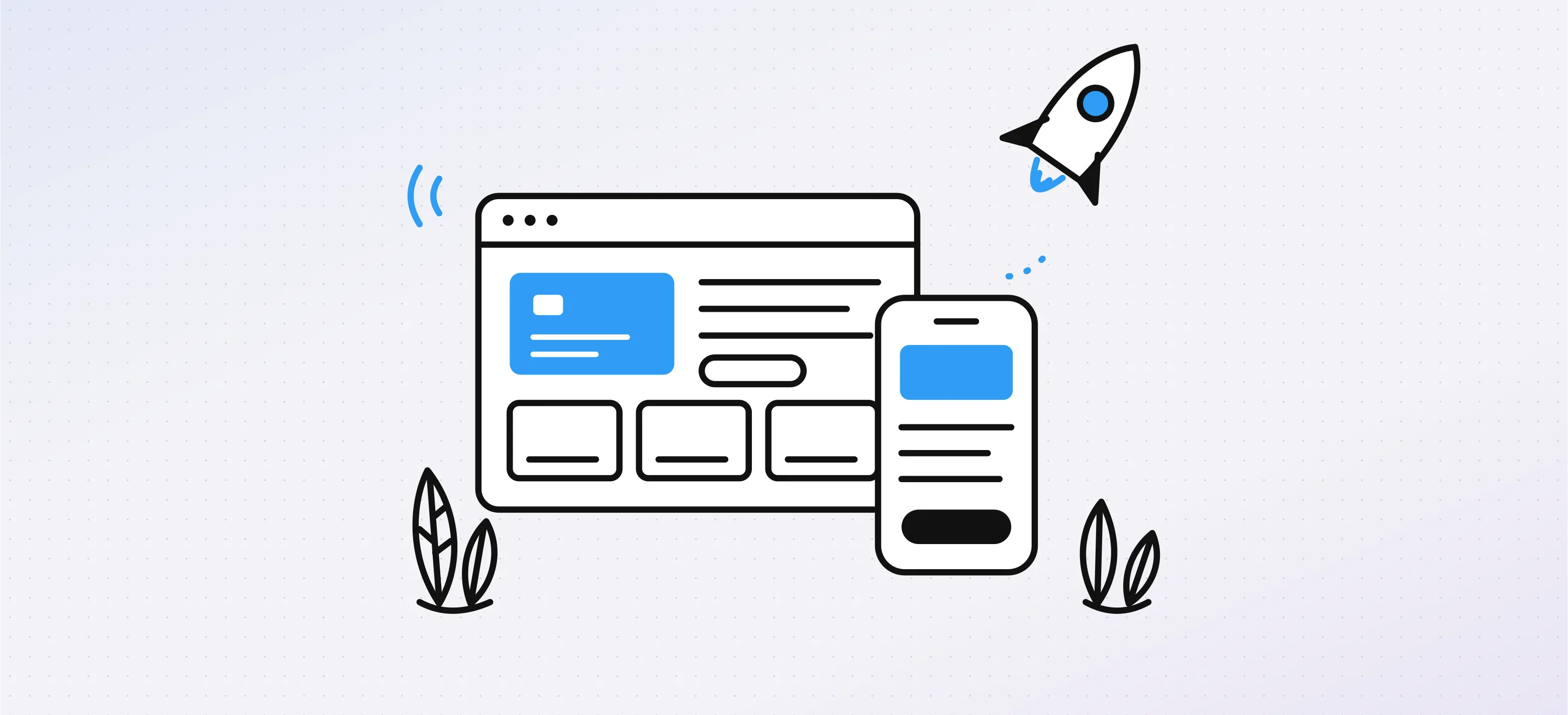
The Proof of Concept is perfectly suited to the development of web applications or digital platforms, as it allows main assumptions to be validated before committing to full development.
Technical compatibility : a PoC is often used to evaluate the compatibility of new technologies (frontend, backend, IA) with the existing architecture.
Third-party service integration : PoCs can validate the integration of external services via APIs, such as payment systems or authentication tools. These small-scale tests allow technical and security issues to be identified quickly.
Complex functionalities : a basic prototype can be created to validate the technical feasibility of a complex functionality, such as an IA-based recommendation engine or an intelligent search system.
User experience (UX) : the PoC can take the form of an interactive mock-up to quickly gather feedback on ergonomics and navigation, allowing early adjustments before further investment.
Performance and security : it can also be used to test the technical robustness of the platform by simulating load peaks or verifying compliance with security and privacy standards (GDPR).
The Proof of Concept is therefore a decisive step in transforming an idea into a viable solution while minimising risks and optimising investments.
POC, prototype and MVP: what's the difference?
Although PoCs share similarities with prototypes and Minimum Viable Products (MVPs), they play a distinct role in the development process.
A Prototype explores design or functionality and provides a visual or interactive representation. It is not intended to validate technical feasibility.
A MVP is a basic version of a product, with essential functionalities, intended to be tested by early users to gather feedback and validate a market.
In contrast, a PoC is not intended to be tested by users or visually explored. It is an internal experiment focused solely on technical feasibility. If the PoC fails, there's often no reason to proceed to a prototype or an MVP. The PoC is the first checkpoint in a broader process, confirming whether the idea is worth developing.
Conclusion
The proof of concept is one of the most important tools in the early phases of innovation. It allows the feasibility of an idea to be evaluated before significant resources are committed, thus reducing development risks and costs. The PoC fosters an environment conducive to learning and experimentation, essential for making good decisions and building robust solutions.