You've probably already heard of the agile method, but do you really know what it involves? Far from common misconceptions, agility is much more than a simple trend: it's an approach that's revolutionising collaborative work and web development. In this article, we'll explore the key principles of the Agile Manifesto and show you why adopting agility is the key to successful innovation and sustainable growth for your business.
What is the agile method?
To understand agile, it's crucial to refer to the Agile Manifesto (2001) which sets out its four founding values:
Individuals and interactions over processes and tools.
Working software over comprehensive documentation.
Customer collaboration over contract negotiation.
Responding to change over following a rigid plan.
In short, agile is a human-centred project management method that aims to quickly deliver a functional product by maximally involving the client and accepting the unexpected.
The main agile methods
Agility isn't a single method, but a set of frameworks and practices. Among the best known are:
Scrum : the most widespread method. Based on short sprints (1 to 4-week iterations), precise roles (Product Owner, Scrum Master, Development Team) and daily rituals ("daily meeting"). Scrum is ideal for complex projects with evolving needs.
Kanban : a visual workflow management tool, in the form of a board, that allows you to clearly visualise work in progress and identify blockers.
Lean Software Development : an approach that focuses on maximising value by eliminating all "waste" in the development process.
Other practices such as Extreme Programming (XP) or the Scaled Agile Framework also exist. It's important to remember that these methods are combinable, and the way agility is practised varies from one company to another.
The agile method applied to web development
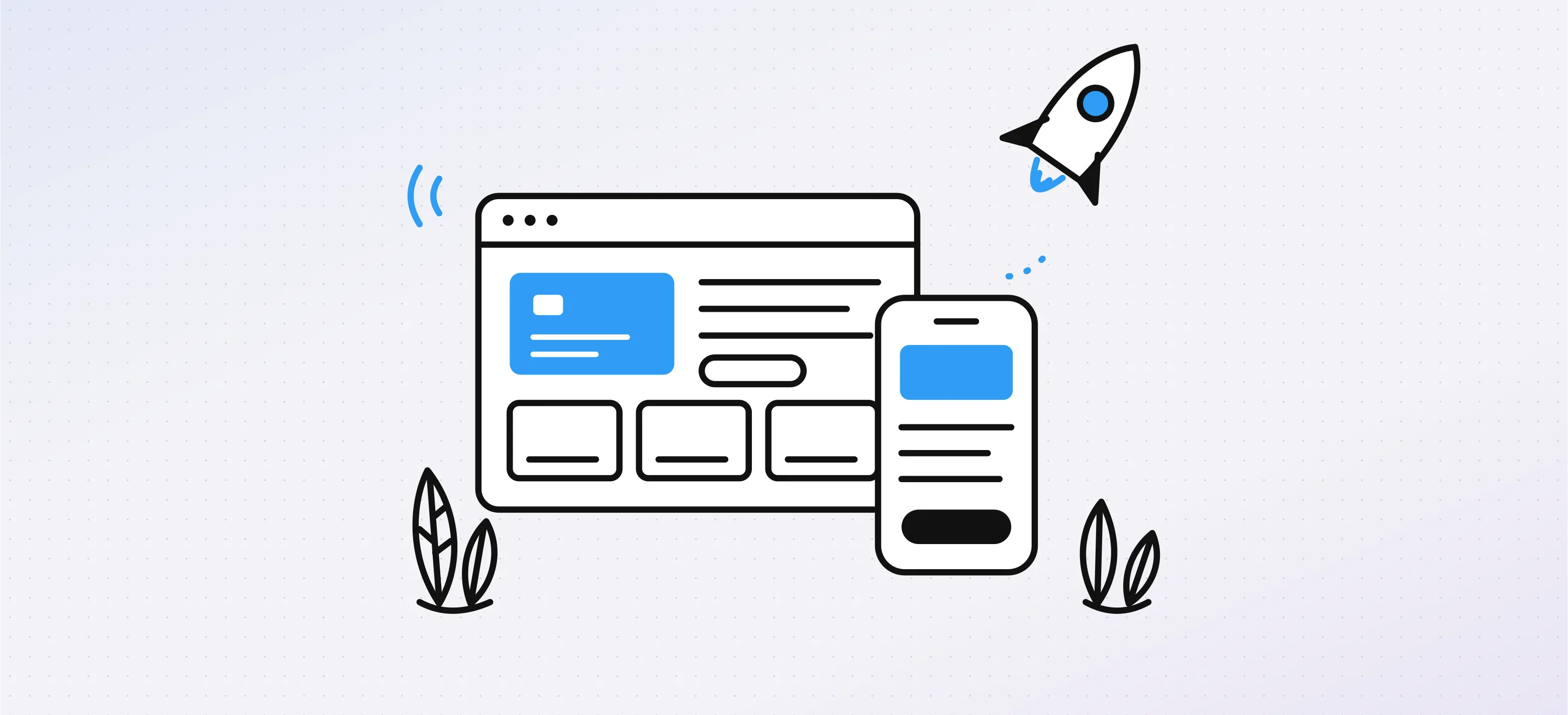
The agile method applies to many areas, but it's in web development that it reaches its full potential. The iterative and evolving nature of digital projects makes this field particularly conducive to agility.
Specifics of agility in web development
Web development is an ideal field for agile for several reasons:
Evolving needs : features can be added or modified during the project to adapt to the market.
Integration of user feedback : short cycles allow user comments to be gathered and integrated from the first versions of the product.
Rapid deployment : the sprint approach allows priority features to be put online quickly, offering value to the client sooner.
The benefits of the agile method for your web project
Adopting agile in a web project has many benefits:
Faster delivery : the team focuses on essential features, allowing them to be delivered quicker.
Easy adaptation : adaptive planning allows for easy management of priority changes.
Increased transparency : clear tracking of tasks and project progress improves communication between the client and the service provider.
Risk reduction : continuous testing allows for the earliest possible detection and correction of technical issues.
For example, for an e-commerce website, the agile approach allows for the rapid launch of a Minimum Viable Product (MVP), and then the addition of features (cart, payment, etc.) over the sprints, based on feedback and current priorities.
In conclusion: choosing agile for innovation
The agile method is not a magic formula, but a mindset and a framework that promotes flexibility, collaboration, and value delivered to the client. In agile, we don't seek perfection from the outset, but we get closer to it at each stage. It's an ideal approach for any company wishing to innovate and remain competitive in the digital ecosystem.

_XrMBM.webp)